miércoles, 13 de noviembre de 2013

Doctor: Mi perro tiene diabetes I

La diabetes mellitus consiste en una carencia de la insulina disponible. Las causas pueden ser porque el páncreas no produzca suficiente insulina, o por la incapacidad de las células corporales para responder a la insulina. 

Como consecuencia las células no pueden absorber suficiente glucosa y, por lo tanto, los niveles de la misma se elevan excesivamente en la sangre. 

perros diabéticos

Los perros de mediana edad, especialmente las hembras, son los más propensos a desarrollar este tipo de enfermedad. En las razas donde se observa un mayor riesgo de sufrir la enfermedad son:
  • A: Alaska Malamute 
  • B: Beagle y Bobtail
  • C: Caniche, Chow Chow y Cairn Terrier
  • D: Daschund y Doberman 
  • G: Golden Retriever 
  • K: Keeshond 
  • P: Puli Húngaro y Pinscher Miniatura
  • S: Samoyedo, Springer Spaniel, Schipperke, Schnauzer Miniatura y Spitz Finlandés
Según las estadísticas, uno de cada quinientos perros puede desarrollar diabetes, aunque las cifras pueden aumentar con el tiempo. 

Síntomas: excreción de glucosa en la orina y un aumento de la misma. Esto desembocará en una pérdida mayor de líquidos corporales y provocará beba más agua y coma más cantidad de comida de lo habitual. 

perros diabéticos

No obstante, el animal sufrirá una pérdida de peso considerable, aunque coma más, debido a la pérdida de glucosa. 

Por último, los dueños observarán que el perro está más cansado y, en algunos casos, un estado de somnolencia prolongado a causa de la falta de glucosa, que es una fuente muy importante de energía.
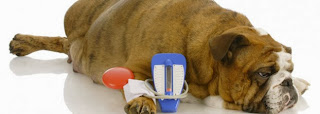
perros diabéticos

El éxito para controlar la enfermedad, dependerá de un orden y control estricto y riguroso por parte de sus dueños; insulina, dieta específica y ejercicio moderado. 

Mediante un control eficaz, sus dueños podrán devolver a sus mascotas la calidad de vida pérdida. 

Continuará...


Diabetes mellitus is a lack is a lack of insulin available. The causes may be because the pancreas does not produce enough insulin or the inability of the body cells to respond to insulin.

As a result the cells can not absorb enough glucose and , therefore , the same levels rise excessively in the blood.

The middle-aged dogs , especially females , are most likely to develop this type of disease . In races where there is a higher risk for the disease:
A: Alaskan Malamute
B : Beagle and Bobtail
C : Poodle , Chow Chow and Cairn Terrier
D : Daschund and Doberman
G: Golden Retriever
K : Keeshond
Q: Hungarian Puli and Miniature Pinscher
S : Samoyed , Springer Spaniel, Schipperke , Schnauzer, Finnish Spitz
According to statistics, one in five hundred dogs can develop diabetes, although the figures may increase over time .

Symptoms glucose excretion in the urine and an increase thereof. This will lead to a greater loss of body fluids and lead to drink more water and eat more food than usual.

However, the animal will suffer a significant weight loss , even eat more , due to loss of glucose.

Finally, observe the dog owners are more tired and , in some cases , a drowsy state prolonged because of the absence of glucose, which is a major source of energy.

The success in controlling the disease , depend on order and strict and rigorous monitoring by their owners , insulin , specific diet and moderate exercise.

Through effective control , their owners may return to their pets the quality of life loss .

Continued ...


martes, 12 de noviembre de 2013

¡No sin mi perro! San Sebastián

Hotel Gudamendi: acepta gatos y perros de todos los tamaños, sin límites de peso. El hotel admite dos mascotas por habitación, y el coste adicional por el alojamiento será de 16 euros por noche. 

A los animales no les estará permitido quedarse solas en la habitación, ni estar en las zonas comunes. 

hotel gudamendi san sebastián

El hotel Gudamendi, de cuatro estrellas, destaca por su situación en la ladera del Monte Igeldo en San Sebastián.

Un hotel ideal para viajeros de turismo y de negocios, ya que, se encuentra a escasos kilómetros del centro.

hotel gudamendi san sebastián

Hotel Avenida: acepta gatos y perros con límites de peso, hasta 5 kg. El hotel admite dos mascotas por habitación y , el coste adicional será de 22 euros por noche. 

hotel avenida san sebastián

Los animales no podrán quedarse solos en la habitación, ni estar en las zonas comunes del hotel.

 A pocos metros de la Playa de Ondarreta, el hotel cuenta con unas espectaculares vistas hacia la ciudad y la bahía. 

playa ondarreta san sebastián

Hotel María Cristina: acepta gatos y perros de todos los tamaños, sin límites de peso. El hotel admite dos mascotas por habitación y, el coste adicional será de 32 euros por noche. 

Hotel María Cristina San Sebastián

El hotel admite mascotas bajo petición y los suplementos, según la mascota, podrán variar. A las mascotas no les estará permitido quedarse solas en la habitación, ni estar en las zonas comunes del hotel. 

Decorado al estilo Belle Epoque, el hotel María Cristina, ofrece unas vistas espectaculares al río Urmea y al mar Cantábrico. 

Hotel María Cristina San Sebastián


Hotel Gudamendi : accepts cats and dogs of all sizes , with no weight limits. The hotel allows two pets per room , and the additional cost for accommodation is 16 euros per night .

The animals are not permitted to be alone in the room , nor be in public areas .

The Gudamendi hotel , four stars , known for its situation on the slope of Mount Igeldo in San Sebastian.

An ideal hotel for leisure travelers and business , and that is a few miles from downtown.

Hotel Avenida: accepts cats and dogs with weight limits, up to 5 kg . The hotel allows two pets per room , the additional cost will be 22 euros per night .

Animals may not be left alone in the room , or be in the hotel's public areas .

 A few meters from the beach Ondarreta , the hotel offers spectacular views of the city and bay.

Hotel Maria Cristina : accepts cats and dogs of all sizes , with no weight limits. The hotel allows two pets per room , the additional cost is 32 euros per night .

Pets are welcome on request and supplements , as the pet may vary. A pets are not permitted to be alone in the room , or be in the hotel's public areas .

Decorated estillo Belle Epoque , Hotel Maria Cristina , offers spectacular views of the river and the Cantabrian Sea Urmea .


jueves, 7 de noviembre de 2013

Razas de Gatos: Balinés

Es una raza doméstica derivada del gato siamés. Su origen se encuentra en EE.UU en los años 40. Su nombre no hace referencia a su lugar de origen, sino que proviene de sus primeros criadores. 

Son gatos muy leales a sus dueños. En algunos casos, puede ser indiferentes al resto de miembros de la familia a no ser que tenga especial afecto por alguno de ellos. 

gato siamés

Tienen una excelente musculatura, con extremidades muy delgadas. Es muy dulce y le encanta estar en compañía de otros animales. 

Le gusta bastante llamar la atención de sus dueños, y por ello suele pasarse la mayor del tiempo haciendo travesuras. 

Su "voz" es más suave y melodiosa que el gato siamés, además su tranquilidad los hace parecer gatos mucho más aristocráticos. 

gato siamés

Es extremadamente dócil y convive a la perfección con niños, sobre todo si son pequeños. 

El ideal de gato balinés, según la Federación Internacional Felina, es esbelto, elegante con lineas largas que se afinan, elástico y musculoso. Tamaño Mediano: 

  • Cabeza: Tamaño mediano, proporcionada con el cuerpo. Equilibrada, tiene forma de cuña con líneas rectas. La cuña comienza en la nariz y gradualmente aumenta en ancho hacia las orejas con líneas rectas. No debería haber depresión a la altura de los bigotes. El cráneo de perfil es ligeramente convexo. Nariz larga y recta, continuando la línea desde la frente sin ninguna rotura. Hocico angosto. Mentón y mandíbula de tamaño mediano. La punta del mentón forma una línea vertical con la punta de la nariz.
  • Orejas: Grandes y en punta, anchas en la base. En cuanto a la ubicación, continuarán las líneas de la cuña. Las puntas de las orejas no se inclinarán hacia el frente.
  • Ojos: De tamaño mediano y ni protuberantes ni hundidos. De forma almendrada y ligeramente oblicuos hacia la nariz para continuar armoniosamente las líneas de la cuña. El color deber ser puro y límpido, de un brillante azul intenso.
  • Cuello: Largo y esbelto.
  • Cuerpo y estructura: Largo y esbelto, bastante musculoso pero delicado y elegante. Los hombros no serán más anchos que las caderas.
  • Patas: Largas y finas, proporcionadas con el cuerpo. Pies pequeños y ovales.
  • Cola: Muy larga, fina incluso en la base. Afinándose hacia la punta.
  • Manto: Fino y sedoso. De un largo mediano en el cuerpo, algo más largo en el collar, hombros y en la cola, cuyo pelaje se verá erizado. No tendrá subpelo lanoso. La máscara de la cara, puntos en las orejas, patas y cola deben corresponder a puntos de color lo más parejos posible. La máscara no se extenderá sobre toda la cabeza sino que se conectará con las orejas por medio de trazas de color. El color del cuerpo debe ser parejo. Se permiten sombras claras en los flancos, pero debe haber un claro contraste entre los puntos y el color del cuerpo.
  • Nota: Se permiten ligeras sombras en el cuerpo armonizadas con los puntos de color. En gatos mayores se permitirá un color de cuerpo más profundo.
  • Balinés: Se prohíben cruzamientos de sia/bal de cualquier variedad de color con silver. Se podrá hacer una excepción por pedido especial del criador al comité nacional de cría. En estos casos el comité determinará el color de la camada.
  • Faltas: Manchas en el vientre o en los flancos, pelos blancos, claros o jaspeado en los puntos, barras y rayas en los puntos, excepto para las variedades “tabby”. 
  • Faltas que niegan certificado: Contraste insuficiente entre los puntos y el color del cuerpo. 
  • Descalifica: Cualquier color de ojos que no sea azul. Manchas blancas en el cuerpo o en los dedos. Bizquera y nudo en cola.

Derivative is a domestic breed Siamese cat . It originated in the U.S. in the 40s. His name does not refer to their place of origin , but comes from his early breeders.

Cats are very loyal to their owners . In some cases it may be indifferent to other family members unless you have special affection for any of them.

They have an excellent musculature , with thin limbs . It is very sweet and loves to be around other animals.

He likes to draw enough attention from their owners , and therefore usually spend most of their time doing mischief.

His "voice" is softer and more melodious than the Siamese cat , and your peace of mind makes them look much more aristocratic cats .

It is extremely docile and coexists well with children , especially if they are small .

The ideal Balinese cat , according to the International Federation Felina , is slender , elegant with long lines that are refined , elastic and muscular. Size Medium :

  • Head: Medium size , proportion with the body . Balanced , is wedge-shaped with straight lines. The wedge starts at the nose and gradually increases in width towards the ears with straight lines. There should be no vacuum at the height of the whiskers . The skull is slightly convex profile . Long, straight nose , continuing the line from the front without any break . Snout narrow . Chin and medium sized jaw . The tip of the chin forms a vertical line with the tip of the nose.
  • Ears: Large and pointed, wide at the base . Regarding location, the lines continue wedge . The tips of the ears not bow to the front.
  • Eyes : Medium size and neither protruding nor deep . Almond-shaped and slightly slanted towards the nose to continue harmonious lines of the wedge. The color must be pure and clear, a bright blue.
  • Neck: Long and slender.
  • Body and structure: Long and slender , quite muscular but delicate and elegant . The shoulders are not wider than the hips.
  • Legs: Long and fine, in proportion with the body. Feet small and oval .
  • Tail: Very long, thin even at the base. Then tapering .
  • Coat: Fine and silky. At a medium length on the body , slightly longer on the collar , shoulders and tail , which will be bristling fur . Will not woolly undercoat . The face mask , points on the ears, legs and tail must match colored dots evenly as possible. The mask does not extend over the entire head, but to be connected to the ears by means of traces of color. The body color should be even. Light shades are allowed on the flanks, but there must be a clear contrast between the points and the body color .
  • Note : slight shadows are allowed in the body harmonized with colored dots . In older cats will allow deeper body color .
  • Balinese : crosses are prohibited sia / bal of any variety with silver color . It may make a special order exception to the national committee breeder breeding . In these cases the committee will determine the color of the litter.
  • Fouls : Spots on the belly or flanks , white hair , clear or mottled spots , bars and stripes in the points, except for varieties " tabby " .
  • Fouls denying certificate insufficient contrast between points and body color.
  • Disqualify : Any eye color other than blue . White spots on the body or fingers . Squint and knotted tail.

martes, 5 de noviembre de 2013

Una única inyección alivia el dolor de perros con cáncer de huesos

Los perros experimentan el mismo dolor y malestar que los humanos, cuando luchan contra un cáncer. La evolución del dolor en el cáncer de huesos en los perros es semejante a los que ocurre en el caso de los seres humanos, la frecuencia y la intensidad es cada vez mayor, según avanzan los meses y las semanas. 

A medida que la enfermedad evoluciona, los perros sufren un dolor que altera su rutina, afectando sus actividades diarias y su calidad de vida. 

En esta etapa de la enfermedad, bastante tardía, el tratamiento para que el animal sufra lo menos posible, suele incluir opioides, esteroides y radiación paliativa. 

perros con cáncer de huesos

Un tratamiento que, en la mayoría de los casos, suele tener efectos secundarios bastante negativos en los perros. 

Los médicos y veterinarios, en su empeño constante por salvar y mejorar la vida de seres humanos y animales, han dado un paso más, en la lucha contra el cáncer: un estudio realizado ,recientemente,  en la Facultad de Medicina Veterinaria de la Universidad de Pennsylvania, Filadelfía, ha descubierto que los perros con cáncer de hueso, en estado avanzado, que recibieron una inyección de la neurotoxina P- saporina experimentaron más alivio en sus dolores, que los perros que recibieron una atención estándar sin la inyección. 

Según, la doctora Dorothy Cimino Brown, de la Universidad de Pennsylvania: "Al estudiar el positivo alivio del dolor que este tratamiento ofrece a los perros, tenemos la esperanza de que también pueda ser eficaz para los seres humanos." 

neurotoxina P- saporina

Las neurotoxinas son popularmente conocidas por la enfermedad que pueden causar, botulismo, pero con el paso del tiempo, los científicos han aprendido a aprovechar las propiedades de las neurotoxinas para un uso positivo. Por ejemplo, el botox se utiliza para eliminar arrugas y la SP-sap se utiliza para disminuir el dolor. La parte de SP de la neurotoxina actúa uniéndose a un nervio sensible al dolor y, después la parte "sap" se infiltra en dicho nervio y lo inutiliza. 

Los propietarios de 70 perros aportaron a sus animales para el estudio. Los perros que recibieron la inyección, al cabo de seis semanas, no tuvieron ningún cambio en la puntuación de la intensidad del dolor. Además, también mostraron una mejoría en el impacto del dolor. Lo más significativo del estudio fue que los perros del grupo SP-sap, se volvieron menos cojos que, los caninos que habían recibido el tratamiento estándar sin inyección. 

neurotoxina P- saporina

El objetivo principal de esta investigación, según la doctora Brown, era identificar los avances en el tratamiento crónico en las personas y en los perros, aprovechando el hecho de que los animales domésticos, durante su vida natural, desarrollan muchas de las mismas enfermedades que causan dolor crónico en las personas. 

El efecto positivo del alivio del dolor, proporciona datos prometedores para pacientes caninos que sufren un cáncer de huesos. 

Dogs experience the same pain and discomfort that humans , when fighting cancer. The evolution of pain of bone cancer in dogs is similar to those in the case of humans, the frequency and intensity is increasing , as the months go and weeks .

As the disease progresses , the dogs suffer pain that disrupts your routine , affecting daily activities and quality of life.

At this stage of the disease, rather late , treatment for an animal to suffer as little as possible , usually include opioids , steroids and palliative radiation .

A treatment that , in most cases, quite often have negative side effects in dogs.

Doctors and veterinarians, in its continuing efforts to save and improve the lives of humans and animals , have gone a step further in the fight against cancer: a study conducted recently at the Faculty of Veterinary Medicine , University of Pennsylvania, Philadelphia , has found that dogs with bone cancer in advanced stages , which received an injection of the neurotoxin P- saporin experienced more relief from their pain , that dogs who received standard care without the injection .

According to , Dr. Dorothy Cimino Brown , University of Pennsylvania : " In studying the positive pain relief that this treatment offers the dogs , we hope that it can also be effective in humans. "

The neurotoxins are popularly known that can cause disease , botulism, but with the passage of time , scientists have learned to take advantage of the properties of the neurotoxins to positive use . For example , Botox is used to remove wrinkles and SP -sap is used to reduce pain . The SP portion of the neurotoxin acts by binding to a nerve sensitive to pain and then the "sap " the nerve infiltrates and destroys it .

The owners of 70 dogs brought their animals to the study. Dogs that received the injection , after six weeks, had no change in score of pain intensity . Furthermore, also showed improvement on the impact of pain . The most significant of the study was that dogs of SP -sap group , became less lame that canines that had received standard treatment without injection .

The main objective of this research , according to Dr. Brown , was to identify chronic treatment advances in people and in dogs , using the fact that pets during his natural life , develop many of the same diseases that cause chronic pain in people.

The positive effect of pain relief , provide promising data for canine patients suffering from bone cancer .

jueves, 31 de octubre de 2013

Enfermedad periodontal en perros y gatos

La enfermedad periodontal (EP), afecta los tejidos del sostén del diente, generando su destrucción progresiva, con la consecuente pérdida de las piezas dentales. 
Es una patología común en perros de todas las edades. Comienza con gingivitis, y después evoluciona al estadio de periodontitis, mucho más nocivo e irreversible, en donde existe pérdida del sostén del diente, caída de una o varias piezas, y en los casos más serios, formación de fístulas oronasales y desarrollo de enfermedades sistémicas. 

El Periodonto, todo lo que está alrededor de la pieza dental, está formado por los tejidos que rodean y dan apoyo al diente: la encía, la mucosa alveolar, el cemento, el ligamento periodontal y el hueso. 

enfermedad periodontal en perros y gatos


En primer lugar, la gingivitis provoca hinchazón, rubor, hipersensibilidad, y hemorragia en el tejido blando que rodea el diente. 

Después, la periodontitis cursa con una inflamación profunda, pérdida del soporte del hueso alveolar y destrucción de la fijación del tejido conectivo fibroso al cuello de los dientes. 

Las bacterias asociadas a la enfermedad peridontal pueden ser causa de infecciones en corazón, hígado y riñones: 

enfermedad periodontal en perros y gatos


Signos Clínicos y Lesiones: 
  • Mal aliento, sangrado bucal y gingivitis. 
  • Movilidad dental y ausencias dentales. 
  • Hipersensibilidad alrededor de la boca. 
  • Depresión y cambios de comportamiento. 
  • Dificultad para morder. 
  • Signología respiratoria, digestiva, cardiaca y urinaria, entre otros. 
Grados de la enfermedad: 
  • Grado 1: Gingivitis, cuidados preventivos. 
  • Grado 2: Gingivitis, recesión gingival leve y un 25% en la pérdida del soporte. Cambios irreversibles. Odontoxesis y cuidados preventivos. 
  • Grado 3: Gingivitis grave, recesión gingival morada, exposición de raíz dental y un 50%  en la pérdida del soporte. Cambios irreversibles. Tratamiento médico, odontoxesis y cuidados preventivos. 
  • Grado 4: Gingivitis grave, recesión gingival morada grave, formación de bolsas peridontales y más de un 50% en la pérdida del tejido del soporte. 
enfermedad periodontal en perros y gatos

Además del tratamiento, odontoxesis y tratamiento médico, la prevención debe continuar en casa: enguaje bucal, recomendado por vuestro veterinario de confianza, que disminuirá el sarro, inhibirá el crecimiento bacteriano y disminuirá el mal aliento, provocando una sensación fresca. Cepillado dental, que se encargará de remover o controlar la generación de placa dentobacteriana, sarro, cálculos y la enfermedad peridontal. 

enfermedad periodontal en perros y gatos

Periodontal disease ( PD) affects tooth-supporting tissues , causing progressive destruction , with consequent loss of teeth .
It is a common condition in dogs of all ages . Begins with gingivitis, and then progresses to stage periodontitis, much more harmful and irreversible , where there is loss of tooth support , drop in one or several parts , and in more serious cases , oronasal fistula formation and development of systemic diseases .

The periodontium , all that is around the tooth , is composed of tissues that surround and support the teeth : the gingiva , alveolar mucosa , cement , periodontal ligament and bone.

First, gingivitis causes swelling , redness , tenderness , and hemorrhage in the soft tissue surrounding the tooth .

Then periodontitis progresses with deep inflammation , loss of alveolar bone support and destruction of fibrous connective tissue attachment to the neck of the teeth.

Bacteria associated with periodontal disease may be caused by infections in heart , liver and kidney :

  • Clinical Signs and Lesions :
  • Bad breath , mouth bleeding and gingivitis.
  • Mobility dental and dental absences .
  • Hypersensitivity around the mouth .
  • Depression and behavioral changes .
  • Difficulty biting.
Signology respiratory , gastrointestinal , cardiac and urinary incontinence, among others.
Degree of illness :
  • Grade 1: Gingivitis , preventive care .
  • Grade 2 : Gingivitis , mild gingival recession and 25% in the loss of support . Irreversible changes . Odontoxesis and preventive care.
  • Grade 3 : severe gingivitis , gingival recession dwelling tooth root exposure and 50% in the loss of support . Irreversible changes . Medical treatment and preventive care odontoxesis .
  • Grade 4 : severe gingivitis , gum recession dwelling severe periodontal pocket formation and more than 50% loss of the support fabric .
Besides treatment , odontoxesis and treatment, prevention must continue at home: mouthwash recommended by your trusted veterinarian , which will decrease the plaque , inhibit bacterial growth and reduce bad breath , causing a cool sensation . Toothbrushing , which shall remove or control the generation of plaque , tartar , calculus and periodontal disease .

martes, 29 de octubre de 2013

¡No sin mi perro! Santa Cruz de Tenerife

Hotel Taburiente

Acepta gatos y perros de todos los tamaños, sin límites de peso. El hotel admite mascotas en algunas habitaciones, por ello habrá que consultar la disponibilidad antes de reservar. 

Acepta una mascota por habitación, en la que no podrá sola, ni en las zonas comunes del hotel.

hotel taburiente

El coste adicional ,por el alojamiento del animal, será de seis euros por noche. 

El hotel Taburiente es ideal para los que viajan por temas de negocios, por sus instalaciones.

hotel tabueriente


Hotel Plaza

Acepta gatos y perros que no pesen más de 5 kg. Admite una mascota por habitación, en la que la mascota no podrá estar sola sin la presencia de sus dueños, ni tampoco en las zonas comunes del hotel. 

La carga adicional por el alojamiento de las mascotas es gratis.

hotel plaza tenerife

El hotel se encuentra en una zona estupenda, en plena Plaza de la Candelaria. Su excelente ubicación conecta a la perfección con sitios de gran atractivo turístico: Palacio de Ferias y Congresos, Parque Marítimo y otras zonas recreativas de interés. 

Hotel Tanausu 

Acepta gatos y perros que no pesen más de 15 kg. El hotel admite dos mascotas por habitación y, la carga adicional por el alojamiento de las mascotas es gratis. 

El animal no podrá quedarse solo en la habitación, ni estar en las zonas comunes del hotel.

hotel tanausu tenerife

Tanausu cuenta con una gran tradición a sus espaldas. Cuenta con un emplazamiento privilegiado, ya que, está entre la zona antigua y el nuevo centro comercial, de deporte y negocios de la ciudad. 

Un hotel muy acogedor, que nos permite conocer Santa Cruz de Tenerife placidamente.

Hotel Taburiente

Pet cats and dogs of all sizes , no weight limits. The hotel allows pets in some rooms , so will have to check availability before booking.

Take one pet per room , which can not alone, nor in the public areas of the hotel.

The additional cost for the accommodation of the animal, is six euros per night .

The Taburiente hotel is ideal for those traveling on business issues for their facilities.

Hotel Plaza

Pet cats and dogs weighing no more than 5 kg . Supports one pet per room , in which the pet can not be alone without the presence of their owners , or in the common areas of the hotel.

The additional charge for the accommodation of pets is free.

The hotel is in a great area , on the Plaza de la Candelaria . Its excellent location seamlessly connects with major tourist attraction sites : Palace of Congresses and Exhibitions , Marine Park and other recreational areas of interest.

Hotel Tanausu

Pet cats and dogs weighing no more than 15 kg . The hotel allows two pets per room , additional charge for the accommodation of pets is free.

The animal may not be alone in the room, nor be in public areas of the hotel.

Tanausu has a great tradition behind it . It has a privileged location , as it is between the old and the new commercial , sport and business of the city.

A cozy hotel that lets us know placidly Santa Cruz de Tenerife .


jueves, 24 de octubre de 2013

Razas de Perros: Malamut de Alaska

Raza nórdica que desciende del lobo ártico. Su nombre proviene de la tribu Mahlemutes de Alaska, un pueblo dedicado, fundamentalmente, a la caza. Cuidaban con mucho esmero a sus perros, ya que, les ayudaban en sus actividades y desplazamientos por la nieve. 

Es una de las razas más antiguas dentro de los perros de trineo. Son perros con un gran parecido entre sí y con los lobos. Poseen un tupido pelaje que los aísla de las bajas temperaturas y los ayuda a soportar su trabajo a bajas temperaturas. 

malamut de alaska

El perro Malamut Alaska es fuerte, con una apariencia potente, y con una buena musculatura. Es capaz de cargar hasta más de 20 kg, durante decenas de kilómetros. 

A pesar de su aspecto, con una presencia imponente, son perros afables, juguetones y muy cariñosos con sus dueños. 

Es una raza que se lleva muy bien con los niños, querrá protegerlos y acompañarlos a todas partes. Su buena relación con los más pequeños de la casa, la convierte en una raza muy especial. 

malamut de alaska

Son perros fieles, cariñosos, tranquilos y poco ladradores. Dada la forma de vida de los esquimales, lo comparten todo, son perros confiados, pero, se mantienen siempre alerta para avisar a su dueño si perciben algo extraño. 

No son perros de guardia o de defensa, ya que, por su naturaleza tienden a ser sociales y amigables con los seres humanos. 

Por ello, la timidez en ellos no es una buena señal, ya que, será por causas ajenas a su genética, y en la mayoría de los casos, se deberá a causas externas producidas por sus dueños que no han sabido socializarlo correctamente. 

malamut de alaska

Si el perro se muestra tímido, habrá que vigilarlo y adiestrarlo, de nuevo, para superar el problema. Si no se remedia, su comportamiento se volverá agresivo y por ende peligroso. 

Debido a su carácter afable y cariñoso con los humanos y, su buena disposición para trabajar, son perros excelentes para ayudar a personas invidentes. 

A pesar de ser cariñosos, juguetones y sensibles, son perros, que saben defenderse de una manera efectiva .

En general, con un buen adiestramiento y socialización, son perros equilibrados que aprenden muy rápido gracias a su carácter hábil y sus reflejos agudos. 

Nordic Race Arctic wolf down . Its name comes from the tribe Mahlemutes of Alaska, a town dedicated mainly to hunting. They looked after with great care to their dogs, and that helped them in their activities and movements by snow .

It is one of the oldest breeds in sled dogs . They are dogs with a strong resemblance to each other and with the wolves . They have a thick coat that insulates them from the cold temperatures and helps support their work at low temperatures.

The Alaskan Malamute dog is strong, with a powerful appearance , and good musculature . It is capable of carrying up to more than 20 kg , for tens of kilometers.

Despite its appearance, with a commanding presence , dogs are gentle, playful and very affectionate with their owners.

It is a breed that gets along very well with children , want to protect them and support them everywhere. His good relationship with the children of the house , makes a very special breed .

Dogs are loyal , affectionate , quiet and little barking . Given the lifestyle of the Eskimos , share everything , dogs are confident, but always remain alert to warn the owner if they feel something strange.

They are not guard dogs or defense because, by their nature tend to be social and friendly with humans.

Thus , shyness in them is not a good sign , because it will be through no fault of their genetics , and in most cases will be due to external causes produced by the owners who have failed to properly socialize .

If the dog is shy , will have to watch and train again to overcome the problem . Left unchecked , their behavior will become aggressive and therefore dangerous.

Because of its gentle and affectionate with humans and their willingness to work , are excellent dogs to help blind people.

Despite being affectionate, playful and sensitive , are dogs that can defend effectively .

In general , with good training and socialization , are balanced dogs that learn quickly thanks to its clever and sharp reflexes .