Mostrando entradas con la etiqueta crías. Mostrar todas las entradas

jueves, 3 de octubre de 2013

León Blanco: los leones de la felicidad... I

Se encuentran en las reservas naturales de África del Sur y, se cría de manera selectiva en algunos zoológicos del mundo entero. 

Su existencia es relevante para el público desde los años 70, apenas se habían visto por primera vez hasta ese momento. 

Según lo que se cree, su gen ha estado siempre en el código de los leones normales, pero debido a que es un gen recesivo, es poco frecuente que aparezcan este tipo de leones. 

leones blancos africanos

Los leones blancos se encontraron por primera vez en Timbavati. Según las creencias africanas, este animal es sagrado y si se cruza en tu camino te dará la felicidad. 

En estado salvaje no pueden sobrevivir mucho tiempo, su pelaje blanco no tiene el camuflaje indicado que al resto de leones les permite cazar sin ningún tipo de problema. 

Cría de Leones Blancos

En 1975, dos crías de león blanco fueron observadas en la reserva privada de Timbavati. Su historia fue contada al mundo entero por Chris McBride en su libro The White Lions of Timbavati - Los leones blancos de Timbavati . - 

leones blancos africanos

Es la historia de dos crías, llamadas Temba - esperanza en zulú - y Tombi - hija -, que tienen un hermano de color normal, llamado Vela - sorpresa. - 

Un año después una leona blanca llamada Phuma, fue vista en Timbavati, y al poco tiempo fue asesinada por unos cazadores que, vendieron su piel en una boutique de la ciudad de Sabi. 

Después del asesinato de Phuma, Temba, Tombi y Vela fueron confiados al zoo nacional de Pretoria en África del Sur. 

leones blancos africanos

En 1981, Tombi tuvo una cría blanca que no sobrevivió. Cinco años después, en 1986, Temba murió después de engendrar a varios pequeños. Vela tuvo una camada, pero, se ignora el año de nacimiento de su descendencia y si sobrevivieron o no. 

Según las investigaciones realizadas durante aquella época, los leones blancos del parque de Ouwehands en Países Bajos parecen ser del linaje de Temba. 

Continuará...

They are in the nature reserves of South Africa, grows selectively in some zoos worldwide.

Their existence is relevant to the public from the 70, just had first seen so far.

According to popular belief, its gene has always been in the normal lions code, but because it is a recessive gene, it is rare that such lions appear.

White lions were found first in Timbavati. According to African beliefs, this animal is sacred and if it crosses your path will give you happiness.

In the wild they can not survive long, her white fur camouflage indicated no other lions that allows them to hunt without any problem.

White Lions Breeding

In 1975, two white lion cubs were observed in the Timbavati Private Reserve. His story was told to the world by Chris McBride in his book The White Lions of Timbavati - The White Lions of Timbavati. -

It is the story of two young, called Temba - hope in Zulu - and Tombi - daughter - who have a normal color brother called Vela - surprise. -

A year later a white lioness named Phuma, was seen at Timbavati, and soon after was killed by hunters that sold their skin in a boutique city Sabi.

After the assassination of Phuma, Temba, Tombi and Vela were entrusted to the National Zoo in Pretoria South Africa.

In 1981, Tombi had a white calf did not survive. Five years later, in 1986, Temba died after the birth of several children. Vela had a litter, but it ignores the year of birth of their offspring and whether they survived or not.

According to research conducted during that time, the white lions Ouwehands Park in Netherlands speak Temba lineage.


Continued ...

martes, 17 de septiembre de 2013

Los Canguros

Son los animales más populares de Australia, existen al menos 53 especies distribuidas por toda Oceanía. Son herbívoros y tienen hábitos nocturnos: comen hierbas cuando el sol se ha ocultado, entre unas siete y diez horas diarias. Para hacerlo se desplazan a cuatro patas, de manera parecida a la de los conejos. 

Sus saltos son capaces de superar los 3,30 m de alto y los 9 m de longitud. Saltan en posición bípeda, con las patas traseras juntas, de manera que parecen movidos por un resorte, alcanzando los 20 km/h. 

Los canguros rojos son los más grandes, los machos llegan a medir 1,40 m. Tienen más de un metro de cola y pueden pesar unos 80 kg. Las hembras son bastantes más pequeñas, miden cerca de un metro y no superan los 35 kg. 

canguros rojos australia

Sus extremidades anteriores son cortas y tienen cinco dedos. Cuando dos machos luchan por una hembra, se agarran con las dos manos y se golpean, como si fuese un combate de boxeo. 

Las patas posteriores son largas y robustas. Sus pies tienen cuatro dedos y, por lo general, el segundo y el tercer dedo están unidos. En el salto, el larguísimo hueso que forma el talón actúa como una palanca. 

La cola es grande, musculosa, y suelen utilizarla como apoyo cuando caminan o están sentados, o como balancín al saltar. También, usándola como apoyo, son capaces de golpear con gran fuerza a sus depredadores mediante sus patas traseras. 

canguros rojos australia

Junto con los koalas, los diablos de Tasmania y las zarigüeyas, los canguros forman un grupo de animales conocido como marsupiales. 

Sus crías nacen tan pequeñas, débiles y antes de completar el desarrollo, para protegerlas y darles calor y alimento, las madres las llevan en una especie de bolsa ubicada sobre su abdomen llamada marsupio, donde se encuentran los pezones de sus mamas. 

La cría nace en estado embrionario, sin vista ni oído, por lo que debe recorrer a ciegas el camino hasta el marsupio. Para llegar sigue un hilo de saliva que deja su madre tras lamer ese recorrido. 

canguro marsupial

El periodo de gestación de los canguros es de cinco semanas; luego, la cría se desplaza hasta la bolsa materna. Allí permanece seis meses alimentándose exclusivamente de leche y sin asomarse al exterior. Después abandona la bolsa, aunque vuelve a ella para alimentarse y ser transportado. 

They are the most popular animals Australia , there are at least 53 species distributed throughout Oceania. They are herbivores and are nocturnal : they eat grass when the sun has set , between about seven and ten hours daily . To make it move on all fours, similarly to the rabbits.

His jumps are able to overcome the 3.30 m high and 9 m in length. They jump in the standing position , with the back legs together so they seem moved by a spring , reaching 20 km / h .

Red Kangaroos are the largest , males measure up to 1.40 m . They have more than a meter of tail and weigh about 80 kg . Females are rather smaller , measuring about a meter and do not exceed 35 kg .

Their forelimbs are short and have five toes . When two males fight over a female , grip with both hands and hit , like a boxing match.

Hind legs are long and robust . The feet have four fingers and , typically , the second and third fingers are attached . In the jump, the lengthy bone forming the heel acts as a lever.

The tail is large , muscular , and often use it as support when walking or sitting , or as a rocker to jump. Also , using it for support, are able to hit with great force to their predators by its hind legs.

Along with the koalas, Tasmanian devils and opossums , kangaroos are a group of animals called marsupials.

Their young are born so small , weak and before completion of the development , to protect them and keep them warm and food , mothers are carried in a pocket located on its belly called marsupium , where the nipples of her breasts.

The young are born in an embryonic state without sight or hearing, so you should go blindly the way to the pouch. To reach follows a string of saliva that leaves its mother after licking that route .

The gestation period is five weeks kangaroos , then moves to breeding mother's pouch . There remains six months exclusively breast feeding without peer outside. After leaving the pouch, but returns to it for food and transportation.


miércoles, 15 de mayo de 2013

Los Pingüinos

La Antártida es el desierto más grande y riguroso del planeta, con 40 ºC bajo cero son muy pocos los animales que pueden sobrevivir a un invierno que dura nueve meses. 

El Pingüino Emperador es el único que se interna en el frío del continente blanco para procrear y sobrevive formando un grupo compacto con sus compañeros. 

Dentro de esta agrupación se relevan los lugares cada cierto tiempo; es decir, los que están en el exterior del grupo, sirviendo de protección contra el frío y el viento, pasan al centro para recuperar el calor. 

pingüino emperador

Esto podríamos denominarlo como calor grupal: para combatir el frío y el viento, los pingüinos macho forman una barrera con sus cuerpos. Se organizan en grupos compactos donde se da un curioso relevo: los que quedan en el exterior poco a poco se desplazan hacia el centro del grupo, donde el calor se conserva; al mismo tiempo, los que están en el interior pasan a resguardar a la agrupación. Fuera de la formación, la temperatura llega a 40 º C bajo cero; pero dentro, puede alcanzar los 20 º C. 

A finales de verano se internan caminando unos 90 km en el continente blanco para encontrar su sitio de reproducción, que año tras año es el mismo. Llegan orientados por la inolinación del Sol. 

pingüino emperador

A mediados de otoño, tras el apareamiento y la puesta de huevos, las hembras vuelven al mar a alimentarse y los machos se quedan empollándolos, durante el crudo invierno, en un pliegue cubierto de plumas que tienen entre las patas. 

Antes de que llegue la primavera , cuando el polluelo ya ha nacido, las hembras regresan con reservas de alimento para relevar al macho en las tareas de crianza, y son los machos los que se marchan al mar para alimentarse. 

Los pingüinos son monógamos mientras crían. Al volver, las parejas se reconocen por su llama y se encuentran entre cientos de pingüinos. 

pingüino emperador

Los polluelos sobreviven a las bajas temperaturas gracias a que están cubiertos por un plumaje espeso y grisáceo que los protege del frío en los primeros meses de vida. Durante este periodo viven ocultos entre las patas de sus progenitores, al resguardo del frío polar. Cuando llega el verano, después de mudar su piel, realizan su primera zambullida en el océano. 

Los Pingüinos Emperador son buceadores experimentados: son capaces de descender hasta 260 m para encontrar peces y krill con los que alimentarse. Dentro del agua pueden aguantar la respiración hasta veinte minutos. 

pingüino emperador

Es la mayor ave nadadora, con un tamaño promedio de 1,20 m de alto y 43 kg de peso. No obstante, se han encontrado ejemplares que superan los 1,50 m de altura. 

Se adaptan perfectamente a la vida del océano y sus alas funcionan como poderosas aletas y poseen un cuerpo hidrodinámico. 

OTROS HABITANTES...

Los Pingüinos de Adelia son también inquilinos del círculo polar antártico. Pasan el invierno sobre el mar Austral y también realizan estrategias de agrupamiento. 

pingüino adelia

UNA MARCHA MUY ESPECIAL

"El viaje del emperador" es una hermosa película documental que cuenta el viaje de los Pingüinos Emperador al centro del continente antártico para reproducirse cada año. 

Fue filmada en el año 2005, en la base científica francesa de Dumont d´Urville, en Tierra Adelia, Antártida. 

Aquí os dejamos un fragmento del documental. Podréis encontrarlo completo en YouTube. 


Antarctica is the largest desert and rigorous in the world, with 40 ° C below zero are very few animals that can survive a winter that lasts nine months. The Emperor penguin is the only one that goes into the cold white continent to breed and survive forming a compact group with peers. Within this group are relieved from time to time places, ie those outside the group, providing protection against the cold and wind, move to the center for heat recovery. This group could call as heat: to combat the cold and wind, the male penguins form a barrier with their bodies. They are organized in compact groups where there is a curious relief: those who remain outside slowly move towards the center of the group, where the heat is retained, while those in the interior pass to protect grouping. Outside of training, the temperature reaches 40 degrees Celsius, but inside, can reach 20 ° C. In late summer, admitted walking about 90 km on the white continent to find their breeding site, which year after year is the same. They inolinación oriented by the Sun In mid-autumn, after mating and laying eggs, females return to sea to feed and empollándolos males stay during the harsh winter in a feathered fold with between the legs. Before spring arrives, when the chick has been born, the females return with food reserves to relieve the male parenting tasks, and it is the males who leave the sea to feed. Penguins are monogamous while raising. Upon returning, the couples are recognized by their calls and are among hundreds of penguins. The chicks survive low temperatures because they are covered by a thick, gray plumage that protects them from the cold in the first months of life. During this period, live hidden between the legs of their parents, sheltered from cold polar. When summer comes, after shedding its skin, make their first dive in the ocean. Emperor Penguins are experienced divers: are able to descend to 260 m to find fish and krill that feed. In the water can hold their breath up to twenty minutes. It is the largest bird swimmer, with an average size of 1.20 m tall and 43 kg weight. However, specimens have been found that exceed 1.50 m in height. They fit perfectly to ocean life and its wings function as powerful flippers and have a streamlined body.

OTHER PEOPLE ...

Adelie Penguins are also tenants of the Antarctic Circle. They winter on the Southern Ocean and also perform clustering strategies.

A VERY SPECIAL RUN

"March of the Penguins" is a beautiful film documentary that tells the journey of emperor penguins to the center of Antarctica to breed each year.

It was filmed in 2005 in the French scientific base of Dumont d'Urville in Adélie Land, Antarctica.


jueves, 25 de abril de 2013

La vida del Cerdo...

Los cerdos son animales "multíparos", tienen entre 5 y 12 crías por camada. La hembra amamanta a los cochinillos durante 60 días. 

Cuando son muchas, las crías suelen tener una talla y un peso menor al esperado y tardan bastante tiempo en recuperarse. 

La preñez de la cerda dura tres meses, tres semanas y tres días. Los cerdito nacen con un peso que a penas supera el kilogramo, pero durante su primer año de vida alcanzan los 100 kg. 

Los cerdos tienen un cuerpo largo y redondeado, patas cortas con pezuñas y la cola también es corta. Algunas razas pueden alcanzar los 200 kg en la madurez. 

cerdos y sus crías

Poseen una piel gruesa y cubierta de unas cerdas duras en ciertas zonas. No obstante, es delicada y se irrita con mucha facilidad si está expuesta mucho tiempo al sol. 

No tienen glándulas sudoríparas, por lo que no traspiran. Suelen permanecer en lugares frescos, tumbados en sitios donde haya agua para regular la temperatura del cuerpo. De esta manera también se quitan los parásitos de la piel. 

Necesitan conservar siempre la temperatura de su cuerpo, que ronda los 39º C. Por eso, cuando hace frío, se alimentan más, para evitar que la temperatura corporal descienda demasiado. 

Las hembras tienen entre seis y siete pares de glándulas mamarías con las que alimenta a sus crías. Los cochinillos compiten por conseguir el mejor pezón materno. 

cerdos y sus crías

Cuando una cerda tiene crías, se le prepara una cuna hecha de viruta de maderas y paja seca para mantener el calor y absorber la humedad del cuerpo. Para la noche se acondiciona un corral con una estufa que mantiene el calor que necesitan. 

Son animales de hábitos diurnos que caminan en busca de alimentos. Pueden presumir de tener un gran olfato y son capaces de descubrir tubérculos, raíces, y gusanos bajo la tierra. Utilizan su hocico para llegar hasta ellos. 

Son omnívoros, se alimentan de sustancias vegetales y animales. Para desarrollarse necesitan comer granos, verduras, y alimentos que presenten un balance correcto de componentes, hidratos, proteínas o vitaminas, entre otros. En muchas grajas les alimentan con los desechos de lo que consumen las personas. 

cerdas y sus crías

Los cerdos son animales muy inteligentes, cariñosos y muy limpios. Por eso, en muchos hogares estadounidenses se consideran mascotas. La raza elegida es la de los cerdos enanos vietnamitas, su tamaño es semejante al de un perro grande. Son obedientes, aunque un poco testarudos; les gusta pasear y suelen compartir sus juegos con los niños y los perros de "su" casa. 

cerdos vietnamitas

Los perros porcinos son animales originarios de Europa y Asia y fueron domesticados hace miles de años en diversos sitios al mismo tiempo. Son dóciles e inteligentes y responden a un jefe, que pueden ser un humano. Los primeros cerdos estaban semidomesticados y vivían libremente en los bosques cerca de las aldeas, donde se acercaban al atardecer para alimentarse con los restos de comida. 

Los Pecaríes, son cerdos de América que viven la selva. Se alimentan de hojas de los árboles, de semillas y de frutos. Al igual que sus parientes los cerdos, tienen un gran olfato y pueden detectar los tubérculos y las raíces más apetecibles a 10 cm de profundidad del suelo. 

pecaríes


Pigs are "multiparous" have between 5 and 12 pups per litter. The female suckling piglets for 60 days. When there are many, the offspring usually have a size and weight than expected and take a long time to recover. The sow's pregnancy lasts three months, three weeks and three days. The piglet born with a weight that exceeds punish kilogram, but during his first year reach 100 kg. Pigs have a long and rounded body, short legs with hooves and the tail is short. Some breeds may reach 200 kg at maturity. They have a thick skin and stiff bristles cover in certain areas. However, it is delicate and easily irritated if exposed too long to the sun. No sweat glands, therefore not perspire. They usually stay in cool places, lying in places where there is water to regulate body temperature. In this way also removed skin parasites. They need to always keep your body temperature, which is around 39 º C. So when it's cold, feed more, to prevent body temperature from dropping too. Females have six to seven pairs of mammary glands with which they feed their young. The piglets competing for the best maternal nipple. When a sow gives birth, he prepares a crib made of wood chips and dry straw to keep warm and absorb moisture from the body. For the night is packed a pen with a stove that keeps the heat they need. They are diurnal animals who walk in search of food. Can boast a great smell and are able to discover tubers, roots, and worms underground. They use their snout to reach them. They are omnivorous, feeding on plant and animal substances. To develop need to eat grains, vegetables, and foods that pose a correct balance of components, carbohydrates, proteins, vitamins, among others. In many rooks feed them waste what people consume. Pigs are very intelligent, affectionate and very clean. So in many American households are considered pets. The race chosen is the Vietnamese miniature pigs, its size is similar to that of a large dog. They are obedient, if a bit stubborn, I like to walk and often share their games with children and dogs of "their" home. Dogs are animals pigs from Europe and Asia and have been domesticated for thousands of years in different places at the same time. They are docile and intelligent and respond to a boss who can be a human. The first were semi-domesticated pigs and lived freely in the forests near the villages, where they approached at dusk to feed on food scraps. The Pecaríes, are pigs living American jungle. They feed on tree leaves, seeds and fruits. Like their relatives the pigs, have a great sense of smell and can detect roots tubers and most desirable at 10 cm soil depth.

lunes, 22 de abril de 2013

La gestación de un ternero, paso a paso.

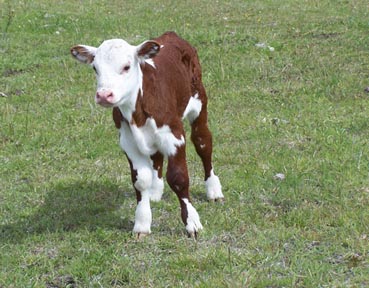
El ternero es la cría de la vaca y el toro. La vaca es un mamífero grande cuya preñez dura de 280 a 292 días. 

vacas y toros pastando

La gestación: 
a) A los 30 días el feto tiene 2 cm de largo y solo un veterinario experimentado puede descubrir el embarazo. 
b) El feto se desarrolla en un ambiente mullido y cálido, a una temperatura de 38º. Durante el periodo de gestación, la va debe recibir una alimentación más completa y cobijo para refugiarse en los días frescos. 
c) Tras 220 días de gestación el ternero pesa unos 14 kg, casi la mitad del peso que tendrá la nacer, y el último mes aumenta 250 g al día. 
d) Cuando el ternero está totalmente desarrollado, se ubica en la posición de parto, con la cabeza hacia la vagina. La vaca, por medio de contracciones de la matriz, impulsa la salida de su cría. 

ternero

Las vacas tiene a sus terneros de pie sobre sus cuatro patas. Cuando comienza el parto, que dura alrededor de una hora, asoma la bolsa y luego la cabeza del ternero. La vaca sigue esforzándose y salen las patas anteriores y luego el pecho. Entonces el ternero comienza a respirar por sus propios medios. Si la respiración no se activa, se le acerca una paja a las fosas nasales para que estornude. 

vaca pariendo

A continuación, la vaca limpia al ternero con su lengua y al lamerlo activa la circulación sanguínea. Media hora después, el ternero está listo para ponerse en pie, busca la ubre y mama de ella. Es fundamental que mame al menos 2 litros de calostro - la primera leche, rica en anticuerpos maternos, nutriente y proteínas - durante las primeras seis horas después del parto. Esto garantiza su salud, ya que la leche lo protege durante las primeras semanas, hasta que sus sistema inmune termine de madurar. 

vaca lamiendo ternero

En algunos establecimientos se desteta al ternero entre los dos y los cuatro meses. Para esto, se lleva a las vacas y sus crías a un terreno alambrado donde haya suficiente pasto. Madres e hijos conviven en este lugar durante una semana. Después son separados. Los terneros más pequeños seguirán alimentándose con leche por medios mecánicos; los más grandes ya pueden pastar y no necesitan mamar. 

ternero vaca

Después de unos seis meses la vaca se encuentra en condiciones de quedar preñada otra vez. A estas alturas, el ternero ya ha sido destetado y aprende a pastar solo. 

The calf is breeding cow and bull. The cow is a large mammal whose pregnancy lasts for 280-292 days.

Gestation:
a) At 30 days the fetus is 2 cm long and only an experienced veterinarian can detect pregnancy.
b) The fetus develops into a soft and warm atmosphere at a temperature of 38 °. During the gestation period, the will should receive a more complete food and shelter to take refuge in the cool days.
c) After 220 days of gestation, the calf weighs about 14 kg, almost half of which have the birth weight, and last month increased by 250 g per day.
d) When the calf is fully developed, is located in the birthing position, with the head towards the vagina. The cow, through contractions of the matrix, drives out its young.

The cows have their calves standing on four legs. When labor starts, which lasts about an hour, puts his bag and then the calf's head. The cow is still struggling and out the front legs and then the chest. Then the calf starts breathing on his own. If breathing is not activated, a straw comes close to the nostrils to sneeze. Then clean the calf cow with her tongue and lick activates blood circulation. Half an hour later, the calf is ready to get up, find the udder and her mom. Mame is essential that at least two liters of colostrum - the first milk, rich in maternal antibodies and protein nutrient - during the first six hours after birth. This ensures their health, as milk protects during the first few weeks, until their immune system mature finish. In some establishments the calf is weaned between two and four months. For this, it leads to cows and calves to a land where there is sufficient pasture fence. Mothers and children living in this place for a week. Then they are separated. Smaller calves fed milk will mechanically, the largest and can graze and do not need feeding. After about six months the cow is able to get pregnant again. At this point, the calf has been weaned and learns to graze alone.

jueves, 11 de abril de 2013

"El Rey León" (I)

Todos en algún momento hemos escuchado la famosa frase de "el león es el rey de la selva" y lo más gracioso es que su hábitat natural son las amplías llanuras africanas cubiertas de pastos, conocidas como sabanas. 

sabana leones

El "título real" le fue otorgado hace siglos, puesto que muchos de nuestros antepasados afirmaban que el león era capaz de vencer a cualquier otro animal en la pelea. Otros achacan esta definición a su valor y algunos a su larga melena...

leones áfrica

Lo cierto es que solo hay que verlo u oírlo rugir para darse cuenta de que es un animal majestuoso digno del título que conserva a través del paso de los tiempos. 

Los leones tienen cuerpos musculosos, largos con extremidades relativamente cortas y cabezas grandes. El macho mide entre 1,70 y 2,50 m de largo, sin incluir la cola, de 90 cm a 1,05 m; su altura llega a 1,23 m, y puede llegar a pesar hasta 250 kg. 

Su gran melena les ayuda a parecer más grandes de lo que son y los protege durante las peleas, ya que los largos pelos le ocultan la garganta, que es el lugar apropiado donde estas fieras descargan su mordedura fatal. 

león melena

El principal rol del león es defender a la manada de intrusos, como otros leones, hienas o depredadores, que podrían comerse a sus crías o quedarse con sus hembras. 

Sobre las leonas recae el trabajo de cazar. Por lo general, lo hacen en grupo y cuando oscurece. Escondidas entre los pastos, acechan a sus presas, las acorralan y las cazan por sorpresa. Así proporcionan el alimento para toda la manada. 

leonas cazando

Una vez las hembras han conseguido la presa, los machos acuden a tomar su parte. ¡Comen ellos los primeros! Después las las leonas, como buenas "mamas", lo reparten entre sus crías. 

Continuará...

Everyone at some point we heard the famous phrase "the lion is the king of the jungle" and the funny thing is that its natural habitat is the extensive grassy plains of Africa, known as savannas.
The "royal title" was given centuries ago, as many of our ancestors claimed that the lion was able to beat any other animal in the fight. Others attribute this definition to value and some of their long hair ... 
The truth is that you just have to see it or hear it roar to realize that it is a majestic animal that retains title worthy through the passage of time. 
Lions have muscular bodies, long with relatively short limbs and large heads. The male is between 1.70 and 2.50 m long, not including the tail, of 90 cm to 1.05 m, and its height reaches 1.23 m, and can weigh up to 250 kg. 
His great mane helps look bigger than they are and protects during fights, since they hide the long hairs throat, which is the place where these beasts unload their fatal bite. 
The main role of the lion is defending the flock from intruders, and other lions, hyenas or predators that could eat their offspring or keep their females. 
About the lionesses hunt lies work. Usually they do in groups after dark. Hidden among the grasses, stalk their prey, and prey cornered by surprise. So provide food for the entire herd. 
Once females have gotten the dam, the males come to take their share.They eat them first! After the lionesses as good "breasts", the spread between their offspring.


Continued ...