Mostrando entradas con la etiqueta anatomía. Mostrar todas las entradas

miércoles, 5 de junio de 2013

Razas de Gatos: Asiático Humo Atigrado

Fue desarrollado en Gran Bretaña bajo el nombre de Burmoire. Este gato no tiene el pelaje de rayas de colores normal del atigrado. 

Los colores de su pelaje pueden ser de cualquiera dentro de la misma gama que el Burmilla. El Asiático Atigrado viene en una gama de colores similar en las siguientes formas; Pinto, Moteado, Mackerel y Clásico (manchado). 

gato asiático atigrado

Su cuerpo tienen una densidad y longitud mediana. Posee músculos firmes, lomo recto y, un pecho generoso pero no demasiado ancho. 

Sus patas traseras son un poco más largas que las delanteras. Tiene una cola mediana - larga, de grosor medio, ligeramente más angosta hacia el extremo redondeado. 

gato asiático atigrado

La cabeza tiene la forma de cuña corta con corte de nariz marcado. Sus orejas varían de medianas a grandes, con puntas redondeadas y, continúan el ángulo de la parte superior del rostro y vista desde el frente  crean el contorno como del ala de mariposa. 

Sus ojos son grandes, bastante separados y en posición ligeramente oriental. Pueden tener el color amarillo o verde. Éste último color de ojos suele darse en los gatos de pelaje plateado. 

gato asiático atigrado

Su pelaje es corto y fino, pegado al cuerpo, y a veces, con algunos pequeños mechones en las orejas. 

No tienen ningún problema específico de cuidado médico y viven muy bien en su adolescencia. 

It was developed in Britain under the name of Burmoire. This cat has no fur colorful striped tabby normal.

The colors of its coat can be any within the same range as the Burmilla. The Asian Tabby comes in a similar color range in the following ways; Pinto Spotted Mackerel and Classic (spotting).

Your body has a density and medium length. It has firm muscles, straight back and a generous chest but not too wide.

Its hind legs are slightly longer than the front. It has a medium tail - long, medium thick, slightly narrower towards the rounded end.

The head has the wedge shape cut with sharp nose cutting. Their ears are medium to large, with rounded tips and continue the angle of the upper face from the front view and create the outline as the butterfly wing.

Their eyes are large, quite separate and slightly oriental position. They may be yellow or green. The latter eye color often found in silver-haired cats.

Their coat is short and fine, close to the body, and sometimes, with some small ear tufts.

They have no specific health care problem and live very well in his teens.

jueves, 18 de abril de 2013

Los caballos

Son animales gregarios y, por lo tanto, viven en manadas. No guardan muchas diferencias con sus antepasados salvajes. 

Muchas de sus actitudes y comportamientos les permiten comunicarse con otros miembros de su grupo y expresar lo que desean. Los ojos, las orejas, los labios, la cola y su postura muestran indicios de lo que les pasa. 

anatomía externa caballo

Por ejemplo, sus orejas son móviles y cambian de posición según su estado de ánimo. Las orejas adelantadas son un signo de curiosidad e interés, pero si se echan hacia atrás es porque el animal está asustado y nervioso. 

Cuando un caballo está nervioso, también, suele golpear repetidamente los cascos contra el suelo, levantar su cola, abrir desmesuradamente sus ollares - los orificios de la nariz - y resoplar con mucha fuerza. Un caballo asustado puede ser muy agresivo. 

Siempre están alerta. En estado salvaje los caballos podrían resultar presa fácil de los animales cazadores. Han desarrollado la capacidad de dormir de pie, y pueden pasar varias horas del día durmiendo en intervalos de unos 30 minutos aproximadamente. En estas circunstancias, para descansar cierran los ojos y bajan un poco la cabeza. 

caballo durmiendo

Cuando pelean por el liderazgo dentro de una manada o quieren exhibirse frente a las hembras, resultan muy peligrosos. Son capaces de encabritarse o empinarse, es decir, ponerse de pie sobre sus patas traseras y dar patadas en el aire para intimidar a su rival. En esta postura sus patas delanteras son las que dan equilibrio al cuerpo. 

Los caballos se huelen para identificarse. Rozan su hocico contra el pelaje de los otros miembros de la manada y hasta se dan suaves mordiscos para reconocerse. Los potrillos suelen jugar, y es normal que se muerdan los crines como parte del juego. 

caballos oliéndose

Para limpiar su pelaje, estirar sus músculos y desentumecerse, los caballos ruedan con el lomo apoyado en el suelo. 

manadas caballos

Curiosidades: Fleischmann
Los caballos poseen un órgano en la parte superior del paladar que se conecta con la boca y la cavidad nasal. Para olfatear y detectar olores levantan la nariz, alzan el labio superior y llenan su boca de aire. Esta acción, que se llama fleischmann, les permite saber si una hembra está en condiciones de aparearse. 

They are gregarious and, therefore, live in herds. No saved many differences with their wild ancestors. 
Many of their attitudes and behavior allow them to communicate with other members of their group and express what they want. The eyes, ears, lips, tail and posture show evidence of what happens. 
For example, his ears are mobile and change position according to your mood. Advanced ears are a sign of curiosity and interest, but if you draw back is that the animal is scared and nervous. 
When a horse is nervous, too, usually by knocking the helmets on the ground, lift your tail, widened her nostrils open - the nostrils - and puffing with great force. A frightened horse can be very aggressive. 
They are always alert. In the wild horses could be easy prey for hunting animals. They have developed the ability to sleep standing, and may spend several hours a day sleeping at intervals of about 30 minutes. In these circumstances, to rest close their eyes and head slightly down. 
When you fight for leadership within a herd or want to show off in front of females, are very dangerous. They are able to rear or steepen, ie stand on its hind legs kicking in the air to intimidate his opponent. In this position his front legs are what give balance to the body. 
The horses smell to identify themselves. Rozan its snout against the fur of the other members of the pack and even give gentle bites to recognize. Foals usually play, and it is normal to bite the mane as part of the game. 
To clean their fur, stretch your muscles and loosen up, the horses roll with the back resting on the ground.


Trivia: Fleischmann
Horses have an organ in the upper palate which connects with the mouth and nasal cavity. To sniff and detect smells up the nose, raise the upper lip and fill her mouth air. This action, called fleischmann, lets you know if a female is ready to mate.

miércoles, 17 de abril de 2013

Aves de corral

Son aves domésticas que se crían en granjas y sirven para el uso familiar o comercial a pequeña escala. Se aprovechan fundamentalmente para el consumo de sus huevos y su carne. 

Entre las aves de corral podemos encontrar gallinas, patos, gansos, codornices y palomas. Las plumas de algunas de ellas se utilizan para rellenas almohadones. Sus excrementos son uno de los mejores abonos que existen, algunos los califican como excelentes. 

aves de corral

Son animales de cuerpo grande y pesado, con alas cortas que no les permiten levantar el vuelo. No tienen dientes para triturar los granos de maíz, picotean el suelo y tragan piedras pequeñas y granos. En el buche los granos se mueven de un lado para otro y terminan de triturarse con la ayuda de las piedras. 

En los comederos se coloca alimento con un balance adecuado de glúcidos, minerales, vitaminas, proteínas y grasas en las cantidades adecuadas para el buen desarrollo de los animales. 

Las aves que se utilizan como proveedoras de carne necesitan proteínas, mientras que las ponedoras de huevos requieren minerales. 

Las aves ponedoras tienen un sector en el corral llamado nidal. Allí se les proporcionan nidos para que pongan sus huevos. 

Los gansos
Emiten sonidos fuertes, llamados graznidos, especialmente ante desconocidos o animales que pueden atacar su corral. Por eso se les compara con los perros, por su carácter "guardián." 

aves de corral

Los pavos
Son originarios de América. Son animales de buen porte y los machos suelen ser mucho más grandes que las hembras. 

aves de corral

Los patos
Necesitan espacios para nadar o al menos para introducir la cabeza y refrescarse. El agua no debe estar estancada ya que puede convertirse en un foco de enfermedades tanto para ellos como para las demás aves de corral. Debajo de la plumas grandes, los patos y sus amigos los gansos tienen delicadas plumas que se aprovechan con fines comerciales. 

aves de corral

Existen aves, como las perdices, los faisanes y los patos salvajes, que se consideran semidomésticas y de caza, aunque se crían en cautiverio por su carne. Viven cerca de las orillas de los ríos donde hay matorrales. Al igual que las aves de corral, suelen vivir a ras del suelo, donde encuentran alimentos y lugares para anidar. 

aves de corral

Las avestruces son aves preciosas, corredoras y originarias de África. Lamentablemente, desde hace algunos años en Sudáfrica la carne de esta ave se ha puesto de moda y se consume más que la de cerdo o la de pollo. Se ha descubierto que es un animal sumamente completo, del que nada se desperdicia. Se utilizan la piel, la carne, las plumas y los huevos. Por eso, en la actualidad, el numero de criaderos ha aumentando mucho y existen en casi todo el mundo. 

aves de corral

Poultry are reared on farms and used for family use or small scale commercial. They prey primarily for the consumption of their eggs and meat. Among poultry can find chickens, ducks, geese, quail and doves. Feathers some are used for stuffed cushions. Their droppings are one of the best fertilizers exist, some qualify them as great. Bodied animals are large and heavy, with short wings that do not allow them to take flight. No teeth for crushing corn, ground peck and swallow pebbles and grains. In the crop grains move from one place to another and end up crushed with the help of the stones. In food feeders placed with a proper balance of carbohydrates, minerals, vitamins, proteins and fats in the right amounts for the proper development of animals. Birds used as providers of meat proteins needed while requiring egg layers minerals.The laying birds have a section called nest in the yard. There they provide nests to lay their eggs.

Geese
They emit loud sounds called quacks, especially to strangers or animals that can attack your yard. So they are compared with dogs, because of their "guardian."

Turkeys
They are originally from America. Animals are good sized and the males tend to be much larger than females.

Ducks
They need space to swim or at least for the head and cool. Water should not be stuck because it can become a source of disease for themselves and for other poultry. Below the large feathers, ducks and geese have friends who take advantage delicate feather commercial purposes. There are birds such as partridges, pheasants and wild ducks, which are considered semi-domesticated and game, but are bred in captivity for their meat. They live near the banks of rivers where there are bushes. 

Like poultry, often live at ground level, where they find food and nesting sites. Ostriches are beautiful birds, and native African runners. Unfortunately, for some years in South Africa the meat of this bird has become fashionable and consumed more than pork or chicken. We have discovered that an animal is extremely comprehensive, from which nothing is wasted. They use the skin, flesh, feathers and eggs. Therefore, at present, the number of farms has increased a lot and exist almost everywhere.


martes, 16 de abril de 2013

¿Hablan los loros?

Los loros (Psittacidae) poseen un órgano vocal entre la tráquea y los bronquios, denominado siringe, y una lengua carnosa y móvil. Por eso, pueden dar forma al aire y emitir sonidos. 

Estas aves no hablan, sino que tienen una gran capacidad para repetir e imitar sonidos, incluso las voces de los humanos. 

loros animales sociables

Son animales muy sociales que viven en bandadas y se comunican permanentemente entre ellos. Hacen sus nidos en los árboles o en los huecos de los barrancos. 

Se reúnen en los árboles , apenas se asoman al sol y salen en bandadas a buscar alimentos. A media día, buscan cobijo a la sombra de los árboles menos frondosos. 

Poseen un pico muy fuerte y curvo cuya mandíbula superior es articulada y móvil. Pueden utilizar sus patas o su pico indistintamente para trepar. 

pico loros

Las plumas son un indicador de la calidad de vida que tienen, si hay cambios de temperatura bruscos, se les caen con más frecuencia. 

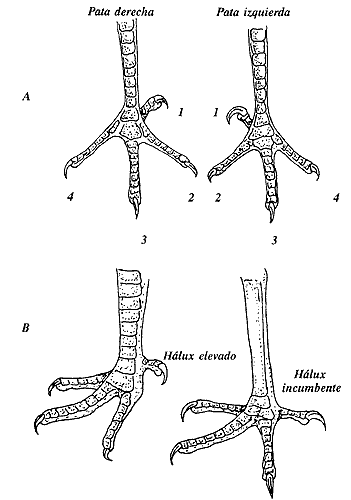
Sus patas tienen cuatro dedos: dos están dispuestos hacia delante, y los otras dos, hacia atrás. Los dedos funcionan como resortes que se estiran cuando se aferran a una rama o a una semilla. 

patas loros


Son aves prensoras que pueden aferrarse a las ramas de los árboles con una pata y sostener el alimento con la otra. Las patas de los loros hacen las veces de manos. 

Las plumas de la cola son más largas porque sirven de timón durante el vuelo y le dan equilibrio al cuerpo cuando el ave está parada. 

plumas loros

Sus ojos son redondos y van cambiando de color a medida que las aves crecen. Les encanta chapotear cuando encuentran agua fresca. 

Los yacos o loros grises africanos se han convertido en mascotas exóticas por la facilidad que tienen para aprender a imitar sonidos. Han sido estudiados por la etóloga estadounidense Irene Pepperberg.

loro gris africano

La científica puso a prueba la capacidad de aprendizaje de estas aves y llegó a la conclusión de que son muy inteligentes, capaces de aprender y utilizar palabras para identificar objetos, contarlos y clasificarlos. 

Parrots (Psittacidae) have a vocal organ between the trachea and bronchi, called syrinx, and a fleshy tongue and mobile. So, can shape the air and make sounds. 
These birds do not speak, but they have a great ability to repeat and imitate sounds, including voices of humans. 
They are very social animals that live in flocks and communicate to each other constantly. They nest in trees or in holes in the cliffs. 
They gather in the trees, just overlook the sun and out in droves to look for food. A half day, seeking shelter in the shade of leafy trees less. 
They have a very strong, curved beak whose upper jaw is articulated and movable. They can use their legs or their peak climbing interchangeably. 
Feathers are an indicator of the quality of life they have, if temperature changes, they fall more often. 
Their feet have four toes, two forward willing, and two backwards. The fingers act as springs that stretch when clinging to a branch or a seed. 
Gripping are birds that can cling to the branches of the trees with one leg and hold food with the other. The legs of the birds serve as hands. 
The tail feathers are longer because they serve rudder during flight and give balance to the body when the bird is standing. 
His eyes are round and change color as the birds grow. They love it when they find cool water splash. 
The Greys and African Greys have become exotic pets by the way they can learn to imitate sounds. Have been studied by the American ethologist Irene Pepperberg. 
The scientist tested the learning abilities of these birds and concluded that they are very intelligent, able to learn and use words to identify objects, counting and sorting.


jueves, 4 de abril de 2013

A paso lento pero seguro...(II)

Las tortugas son ovíparas, es decir, las hembras ponen huevos. Sin embargo, no los cuidan; los huevos se incuban por el calor que irradia el sol. Cuando eclosionan, las crías ya están desarrolladas. 

tortugas huevos

Tienen las patas cortas y robustas, terminadas en uñas fuertes, que les permiten avanzar en cualquier tipo de terreno. Son animales que caminan mucho y, por ello, necesitan tener espacio para recorrer. 

Como todo reptil tienen el cuerpo cubierto por escamas. No tienen dientes, pero poseen unos potentes maxilares y una boca recubierta por una lámina córnea. 

Las tortugas son terrestres son herbívoras y obtienen el agua de sus alimentos. Por su parte, las que viven en los mares suelen ser carnívoras y se alimentan de medusas, moluscos y crustáceos. 

tortugas marinas

Cuando las temperaturas bajan, las tortugas excavan madrigueras en la tierra para hibernar. Sus cuerpos cambian: disminuyen sus funciones vitales, baja su temperatura y entran en un letargo que dura todo el invierno. 

El cuello de las tortugas se retrae al interior del caparazón con un movimiento semejante al del plegado de un telescopio. 

Su cuerpo está protegido por un caparazón formado por placas óseas cubiertas por una capa córnea. La parte posterior tiene forma abombada y la anterior, llamada peto, es plana. Ambas partes están unidas para proteger los órganos internos y preservar la temperatura del cuerpo. Las vértebras y las costillas se fusionan en el interior de esta estructura para hacerla más resistente. 

Muchos de vosotros seguro que habéis adoptado como mascotas a las pequeñas tortugas Trachemys. Unas tortuguitas que habitan en charcas, ríos y arroyos de poca profundidad. Como son semiacuáticas pasan una parte del día en el agua y otra en tierra, tomando el sol. 
tortugas trachemys
Los aficionados a este tipo de animales debéis preparar tanques en los que haya espacio suficiente para que naden a sus anchas y además reciban bien la luz del sol. 

The turtles are oviparous, that is, the females lay eggs. However, do not care, the eggs are incubated by the heat radiated by the sun. When they hatch, the young are already developed. 
They have short powerful legs, strong nails terminated, allowing them to move in any terrain. They are animals that walk a lot and therefore need to have room to roam. 
Like all reptiles have the body covered with scales. They have no teeth, but possess some powerful jaws and a mouth covered with a sheet cornea. 
The turtles are terrestrial are herbivores and obtain water from their food. Meanwhile, those living in the seas are usually carnivorous and feed on jellyfish, molluscs and crustaceans. 
When temperatures drop, tortoises dig burrows in the ground to overwinter. Their bodies change: decrease its vital functions, low temperature and come into a lethargy that lasts all winter. 
The turtle neck is retracted into the shell with a movement similar to the folding of a telescope. 
His body is protected by a shell composed of bony plates covered by a horny layer. The back has a convex form and above, called dungarees, is flat. Both parts are joined to protect and preserve the internal organs of the body temperature. The vertebrae and the ribs merge into the interior of this structure to make it more resilient. 
Sure many of you have adopted as pets for small turtles Trachemys. Some turtles that live in ponds, rivers and shallow streams. As are semiaquatic spend part of the day in the water and another on land, in the sun. 
Fans of this type of animal must prepare tanks where there is enough space for them to swim at ease and also receive good sunlight.