Mostrando entradas con la etiqueta modos de vida. Mostrar todas las entradas

lunes, 6 de mayo de 2013

El mamífero más rápido del mundo

El guepardo es el animal terrestre más veloz. Puede alcanzar 115 km/h en carreras cortas. Su nombre proviene del latín medieval gattus pardus, que significa "gato leopardo." 

Es carnívoro y pertenece a la familia de los félidos. Vive en las llanuras y planicies de África. Caza gracias a su vista y, por supuesto, a su gran velocidad. 

Tienen una vista privilegiada: ven perfectamente en la oscuridad y observan a sus presas a mucha distancia. No se precipitan en el momento de la caza. 

gueopardo

Las orejas son pequeñas y planas y se aplastan contra la cabeza en el instante de máxima tensión, es decir, cuando van a saltar sobre su presa. 

Los conductores nasales son más grandes que los de los demás félidos, para permitir la entrada de las cantidades adicionales de oxígeno que necesita en su rápida carrera hacia la presa. 

Sus patas son más largas y delgadas que las del resto de los felinos. Los pies tienen una estructura similar a los del perro, con almohadillas duras y uñas no retráctiles, que les permiten frenar con rapidez y hacer giros súbitos. 

Su cola mide entre sesenta y ochenta centímetros, miden alrededor de 1,50 metros y suelen pesar unos 43 kilos. 

gueopardo

Los gueopardos son polígamos. Cuando las hembras terminan de criar una camada buscan uno o varios machos que las fecunden. El número de cachorros es de dos o tres por camada. 

El gueopardo estuvo a punto de desaparecer de nuestro planeta debido a su incapacidad para defender a sus crías, y también por la caza indiscriminada. En Asia se considera una especie en peligro de extinción, y en las llanuras abiertas de África tropical, una especie amenazada. 

gueopardo con sus crías

The cheetah is the fastest land animal. It can reach 115 km / h in short races. Its name comes from the medieval Latin gattus pardus, meaning "cat leopard." It is carnivorous and belongs to the family of felines. He lives in the plains and plains of Africa. Hunting with their look and, of course, to his great speed. They have a privileged view: see perfectly in the dark and watch their prey over long distances. No rush at the time of the hunt. The ears are small and flat and flatten against the head at the moment of maximum tension, ie when going to pounce on its prey. Nasal drivers are larger than those of other felids, to allow entry of additional amounts of oxygen needed in quick race to the dam. Their legs are longer and thinner than the rest of the cats. The feet have a structure similar to the dog, with hard pads and non-retractable claws that enable them to stop quickly and make sudden turns. His tail is between sixty and eighty centimeters, measure around 1.50 meters and usually weigh about 43 kilos. The gueopardos are polygamous. When females to breed a litter end up seeking one or several males that fertilize. Puppies number is two or three per litter. The gueopardo was about to disappear from our planet due to their inability to defend their young, and also for hunting. In Asia is considered an endangered species, and on the open plains of tropical Africa, a threatened species.

viernes, 26 de abril de 2013

Animales que se han adaptado a la vida urbana...

Las ciudades constituyen ecosistemas artificiales únicos y la mano del ser humano está presente en cada uno de los espacios de los componen. Sin embargo, muchos animales han adaptado su forma de vida para sobrevivir allí; la basura y los desperdicios les sirven de alimento, y encuentran infinidad de recovecos para refugiarse, descansar y reproducirse sin temores.  Al final, muchos de ellos están más seguros en las ciudades, porque allí no habitan sus depredadores naturales. 

Las cigüeñas se han adaptado, muy bien, desde hace muchos años a vivir en las torres más altas de las ciudades europeas. Llegan de la mano de la primavera y se instalan en los mismos nidos que construyeron temporadas atrás. 

cigüeñas catedrales

El estornino es un pájaro que se alimenta de lombrices e insectos, aunque también puede comer los restos de alimentos que encuentra a su paso. Por eso, y porque suele adueñarse de los nidos de otros pájaros, se ha adaptado tan bien a la vida urbana. 

estornino

Las salamanquesas son pequeños reptiles que habitan en las terrazas y los jardines de las ciudades. En sus patas poseen unas ventosas que les permiten adherirse a las paredes y trepar por ellas. 

salamanquesas

Los lagos y estanques de los parques son frecuentados por aves acuáticas, como patos y cisnes, que además de encontrar un sitio donde zambullirse son alimentadas por los paseantes, a cuya presencia se acostumbran fácilmente. 

cisnes

En las ciudades portuarias es frecuente ver lobos marinos. Los puertos son ideales para estos monumentales mamíferos, porque en ellos consiguen peces y además están protegidos de las orcas y los tiburones del mar abierto, que son sus depredadores naturales. 

lobos marinos

Los mapaches son carnívoros y usan sus patas delanteras para tomar y sostener los alimentos. Por eso no les resulta difícil encontrar comida en los cubos de basura. Se instalan en las hendiduras de los techos de las casas y allí cuidan a sus crías. También suelen pasearse por los jardines. 

mapaches

Los murciélagos son mamíferos voladores que se han adaptado a vivir en la parte superior de algunos edificios o debajo de los puentes. Producen sonidos de alta frecuencia que, al chocar con los objetos, rebotan y les permiten localizar a sus presas y los objetos de su entorno. 

murciélagos

Los alacranes o escorpiones son animales emparentados con las arañas y, al igual que ellas, conviven con los seres humanos en todos los ambientes desde tiempos muy antiguos. Se alimentan de insectos, especialmente de cucarachas, tan típicas de las ciudades. Habitan en los túneles y en las cloacas, donde hay humedad. 

alacranes y escorpiones

Los perros y los gatos son los animales que llevan miles de años en contacto con el ser humano, tanto es así que es difícil imaginar que alguna vez no estuvieron aquí..., los perros están entre los mamíferos más conocidos del mundo y tomaron al ser humano como jefe de su manada en tiempos prehistóricos. Los gatos fueron adoptados y venerados por muchos pueblos de la Antigüedad, y hoy viven casi en su totalidad en los hogares, como mascotas, o libremente en las ciudades del mundo. 

perros y gatos


Cities are unique ecosystems and artificial human hand is present in each of the spaces of the components. However, many animals have adapted their lifestyle to survive there, the trash and garbage they feed, and find plenty of nooks and crannies for shelter, rest and reproduce without fear. In the end, many of them are safer in the cities, because there is no natural predators inhabit.

Storks have adapted very well, for many years to live in the tallest towers of European cities. They come from the hand of spring and are installed in the same nests they built seasons ago.

The starling is a bird that feeds on worms and insects, but can also eat leftover food that is in its path. For this reason and because it tends to take over the nests of other birds, has adapted well to urban life.

Geckos are small reptiles that inhabit the terraces and gardens of the city. Its legs have suction cups that allow them to adhere to the walls and climb them.

The lakes and ponds of the parks are frequented by waterfowl, such as ducks and swans, in addition to finding a place to dive are fed by walkers, whose presence is usually easily.

In the port cities often see sea lions. The ports are ideal for these monumental mammals, because they get fish and are also protected by killer whales and sharks offshore, which are their natural predators.

Raccoons are carnivorous and use their front legs to grasp and hold food. So I do not find it difficult to find food in garbage cans. They settle in the crevices of the roofs of the houses and raise their young there. They also tend to walk around the gardens.

Bats are flying mammals that have adapted to live on top of some buildings or under bridges. They produce high-frequency sounds, colliding with objects, bounce and allow them to locate prey and objects in their environment.

The animals scorpions or scorpions are related to spiders and, like them, live with human beings in all environments from very ancient times. They feed on insects, especially cockroaches, so typical of cities. They live in the tunnels and sewers, where there is moisture.

Dogs and cats are animals for thousands of years in contact with humans, so much so that it is hard to imagine that once were not here ..., dogs are among the world's best known mammals and took the man as head of his herd in prehistoric times. The cats were adopted and venerated by many peoples of antiquity, and now live almost entirely in homes, as pets, or freely in the world's cities.


jueves, 18 de abril de 2013

Los caballos

Son animales gregarios y, por lo tanto, viven en manadas. No guardan muchas diferencias con sus antepasados salvajes. 

Muchas de sus actitudes y comportamientos les permiten comunicarse con otros miembros de su grupo y expresar lo que desean. Los ojos, las orejas, los labios, la cola y su postura muestran indicios de lo que les pasa. 

anatomía externa caballo

Por ejemplo, sus orejas son móviles y cambian de posición según su estado de ánimo. Las orejas adelantadas son un signo de curiosidad e interés, pero si se echan hacia atrás es porque el animal está asustado y nervioso. 

Cuando un caballo está nervioso, también, suele golpear repetidamente los cascos contra el suelo, levantar su cola, abrir desmesuradamente sus ollares - los orificios de la nariz - y resoplar con mucha fuerza. Un caballo asustado puede ser muy agresivo. 

Siempre están alerta. En estado salvaje los caballos podrían resultar presa fácil de los animales cazadores. Han desarrollado la capacidad de dormir de pie, y pueden pasar varias horas del día durmiendo en intervalos de unos 30 minutos aproximadamente. En estas circunstancias, para descansar cierran los ojos y bajan un poco la cabeza. 

caballo durmiendo

Cuando pelean por el liderazgo dentro de una manada o quieren exhibirse frente a las hembras, resultan muy peligrosos. Son capaces de encabritarse o empinarse, es decir, ponerse de pie sobre sus patas traseras y dar patadas en el aire para intimidar a su rival. En esta postura sus patas delanteras son las que dan equilibrio al cuerpo. 

Los caballos se huelen para identificarse. Rozan su hocico contra el pelaje de los otros miembros de la manada y hasta se dan suaves mordiscos para reconocerse. Los potrillos suelen jugar, y es normal que se muerdan los crines como parte del juego. 

caballos oliéndose

Para limpiar su pelaje, estirar sus músculos y desentumecerse, los caballos ruedan con el lomo apoyado en el suelo. 

manadas caballos

Curiosidades: Fleischmann
Los caballos poseen un órgano en la parte superior del paladar que se conecta con la boca y la cavidad nasal. Para olfatear y detectar olores levantan la nariz, alzan el labio superior y llenan su boca de aire. Esta acción, que se llama fleischmann, les permite saber si una hembra está en condiciones de aparearse. 

They are gregarious and, therefore, live in herds. No saved many differences with their wild ancestors. 
Many of their attitudes and behavior allow them to communicate with other members of their group and express what they want. The eyes, ears, lips, tail and posture show evidence of what happens. 
For example, his ears are mobile and change position according to your mood. Advanced ears are a sign of curiosity and interest, but if you draw back is that the animal is scared and nervous. 
When a horse is nervous, too, usually by knocking the helmets on the ground, lift your tail, widened her nostrils open - the nostrils - and puffing with great force. A frightened horse can be very aggressive. 
They are always alert. In the wild horses could be easy prey for hunting animals. They have developed the ability to sleep standing, and may spend several hours a day sleeping at intervals of about 30 minutes. In these circumstances, to rest close their eyes and head slightly down. 
When you fight for leadership within a herd or want to show off in front of females, are very dangerous. They are able to rear or steepen, ie stand on its hind legs kicking in the air to intimidate his opponent. In this position his front legs are what give balance to the body. 
The horses smell to identify themselves. Rozan its snout against the fur of the other members of the pack and even give gentle bites to recognize. Foals usually play, and it is normal to bite the mane as part of the game. 
To clean their fur, stretch your muscles and loosen up, the horses roll with the back resting on the ground.


Trivia: Fleischmann
Horses have an organ in the upper palate which connects with the mouth and nasal cavity. To sniff and detect smells up the nose, raise the upper lip and fill her mouth air. This action, called fleischmann, lets you know if a female is ready to mate.

martes, 16 de abril de 2013

¿Hablan los loros?

Los loros (Psittacidae) poseen un órgano vocal entre la tráquea y los bronquios, denominado siringe, y una lengua carnosa y móvil. Por eso, pueden dar forma al aire y emitir sonidos. 

Estas aves no hablan, sino que tienen una gran capacidad para repetir e imitar sonidos, incluso las voces de los humanos. 

loros animales sociables

Son animales muy sociales que viven en bandadas y se comunican permanentemente entre ellos. Hacen sus nidos en los árboles o en los huecos de los barrancos. 

Se reúnen en los árboles , apenas se asoman al sol y salen en bandadas a buscar alimentos. A media día, buscan cobijo a la sombra de los árboles menos frondosos. 

Poseen un pico muy fuerte y curvo cuya mandíbula superior es articulada y móvil. Pueden utilizar sus patas o su pico indistintamente para trepar. 

pico loros

Las plumas son un indicador de la calidad de vida que tienen, si hay cambios de temperatura bruscos, se les caen con más frecuencia. 

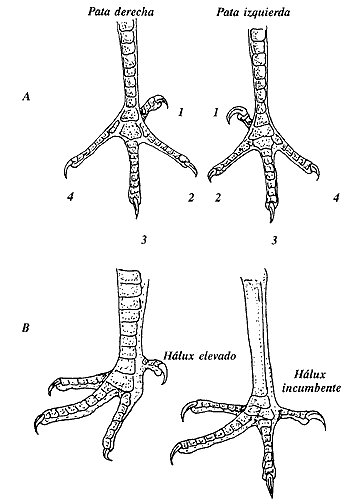
Sus patas tienen cuatro dedos: dos están dispuestos hacia delante, y los otras dos, hacia atrás. Los dedos funcionan como resortes que se estiran cuando se aferran a una rama o a una semilla. 

patas loros


Son aves prensoras que pueden aferrarse a las ramas de los árboles con una pata y sostener el alimento con la otra. Las patas de los loros hacen las veces de manos. 

Las plumas de la cola son más largas porque sirven de timón durante el vuelo y le dan equilibrio al cuerpo cuando el ave está parada. 

plumas loros

Sus ojos son redondos y van cambiando de color a medida que las aves crecen. Les encanta chapotear cuando encuentran agua fresca. 

Los yacos o loros grises africanos se han convertido en mascotas exóticas por la facilidad que tienen para aprender a imitar sonidos. Han sido estudiados por la etóloga estadounidense Irene Pepperberg.

loro gris africano

La científica puso a prueba la capacidad de aprendizaje de estas aves y llegó a la conclusión de que son muy inteligentes, capaces de aprender y utilizar palabras para identificar objetos, contarlos y clasificarlos. 

Parrots (Psittacidae) have a vocal organ between the trachea and bronchi, called syrinx, and a fleshy tongue and mobile. So, can shape the air and make sounds. 
These birds do not speak, but they have a great ability to repeat and imitate sounds, including voices of humans. 
They are very social animals that live in flocks and communicate to each other constantly. They nest in trees or in holes in the cliffs. 
They gather in the trees, just overlook the sun and out in droves to look for food. A half day, seeking shelter in the shade of leafy trees less. 
They have a very strong, curved beak whose upper jaw is articulated and movable. They can use their legs or their peak climbing interchangeably. 
Feathers are an indicator of the quality of life they have, if temperature changes, they fall more often. 
Their feet have four toes, two forward willing, and two backwards. The fingers act as springs that stretch when clinging to a branch or a seed. 
Gripping are birds that can cling to the branches of the trees with one leg and hold food with the other. The legs of the birds serve as hands. 
The tail feathers are longer because they serve rudder during flight and give balance to the body when the bird is standing. 
His eyes are round and change color as the birds grow. They love it when they find cool water splash. 
The Greys and African Greys have become exotic pets by the way they can learn to imitate sounds. Have been studied by the American ethologist Irene Pepperberg. 
The scientist tested the learning abilities of these birds and concluded that they are very intelligent, able to learn and use words to identify objects, counting and sorting.


viernes, 12 de abril de 2013

Parecidos razonables: los hombres y el chimpancé

Los chimpancés son unos simios que viven en las junglas y praderas africanas, y son animales muy inteligentes: se despiojan unos a otros, se toman de la mano, se besan e incluso pueden sonreír. 

chimpancés

Son capaces de fabricar herramientas, como ramas de los árboles para comer insectos, y utilizarlas, como palitos o piedras para obtener deliciosos manjares, a diferencia de otros monos y simios

Pasan horas limpiándose unos a otros, sus manos son útiles para quitar pequeñas semillas, suciedad y piojos. Utilizan las hojas de los árboles como esponjas cuando se bañan. 

chimpancés inteligentes

Por todas estas cosas, son muchos los que encuentran a los chimpancés parecidos pero diferentes a los hombres. Se cree que los linajes humano y chimpancé se dividieron hace aproximadamente siete millones de años. 

En ese tiempo, muchas especies de homínidos aparecían y desaparecían, hasta que finalmente evolucionaron en el Homo sapiens. 

Nuestra especie posee una serie de características que los chimpancés no tienen: caras aplanadas, cerebros más grandes, espinas dorsales rectas y manos y pies altamente especializados. 

homo sapiens

Los chimpancés son nuestros parientes vivos más cercanos; comparten aproximadamente el 96% de nuestro ADN. 

Un ejemplar macho adulto puede alcanzar 1,60 m de estatura. Por lo general, tienen el cuerpo recubierto de pelo liso, de un color negro lustroso, que en algunos ejemplares presenta reflejos castaños rojizos mate. 

Se mantienen en grupos que ocupan territorios de entre 10 0 20 kilómetros cuadrados. Los machos establecen alianzas políticas para tener el poder dentro del grupo. 

familia chimpancés

Viajan y comen sobre el suelo; pero duermen en los árboles, donde construyen sus nidos a no demasiada altura, entrecruzando ramajes y ramitas que apoyan sobre una rama sólida en forma de horquilla. 

Normalmente andan sobre sus cuatro patas. Aunque a menudo, a aquellos que habitan en la sabana se los ve caminando sobre sus dos patas traseras y haciendo uso de ramas u otros objetos para ayudarse, como si fueran bastones. 

chimpancés andando

Son omnívoros: se alimentan de frutas, brotes vegetales y hojas; también comen hormigas y termitas, huevos de ave y miel. En ocasiones, se alimentan de primates inferiores y pequeños mamíferos. 

A sus crías les encanta jugar, pasan la mayor parte del tiempo haciéndolo, lo que les sirve para aprender a imitar a los adultos: buscan alimentos, usan herramientas o practican cómo trepar. 

crías de chimpancé

A pesar de ser nuestros parientes vivos más cercanos, estos animales se encuentran en peligro de extinción por responsabilidad del ser humano. 

Ecologistas y conservacionistas han advertido que los grandes simios se hallan en riesgo: quedan solo 650 gorilas, apenas 25.000 orangutanes y cerca de 38.000 chimpancés en todo el mundo. 

Sus mayores problemas son la reducción de su hábitat natural por la destrucción de los bosques, las guerras civiles, la caza furtiva, venta de su carne y comercio de simios vivos. 

peligro extinción chimpancés

Chimpanzees are apes living in the jungles and African grasslands, and are very intelligent animals: they despiojan each other, they hold hands, kiss and even can smile. 
They are able to make tools such as tree branches to eat insects, and use them as sticks or rocks to get delicious food, unlike other monkeys and apes. 
They spend hours wiping each other, their hands are useful for removing small seeds, dirt and lice. The leaves of the trees like sponges when they bathe. 
For all these things, there are many who are similar to chimpanzees but different from men. It is believed that the human and chimpanzee lineages split about seven million years. 
At that time, many species of hominids appeared and disappeared, until finally evolved into Homo sapiens. 
Our species has a number of features that chimpanzees do not have: flattened faces, larger brains, spines straight and highly specialized hands and feet. 
Chimpanzees are our closest living relatives, sharing approximately 96% of our DNA. 
An adult male specimen can reach 1.60 m in height. Usually, their bodies covered with hair smooth, shiny black color, in some specimens have auburn highlights mate. 
They stay in groups occupying territories between 10 0 20 square kilometers. Males establish political alliances to have the power within the group. 
They travel and eat on the ground, but roost in trees, where they build their nests not too high, crisscrossing branches and twigs on a branch supporting forked solid. 
Normally walk on all fours. Although often, those who live in the savanna are seen walking on their hind legs and using branches or other objects to help, like canes. 
They are omnivores: they feed on fruits, vegetables and sprouts leaves, also eat ants and termites, bird eggs and honey. Occasionally feed on small mammals and lower primates. 
Their young love to play, spend most time doing, which helps them to learn to imitate adults: look for food, use tools or practice how to climb. 
Despite being our closest living relatives, these animals are endangered by human responsibility. 
Ecologists and conservationists have warned that the great apes are at risk: are only 650 gorillas, orangutans just 25,000 and about 38,000 chimpanzees worldwide. 
Their biggest problems are reducing their natural habitat by forest destruction, civil wars, poaching, selling their meat and live ape trade.